Baby eye color predictor: the honest version
No baby eye color predictor can tell you the exact color your child will have. Eye color depends on several genes, mainly OCA2 and HERC2, and a photo shows none of them. A baby's eyes can also change through the first year. Our tool only draws a likely looking mix of both parents.
By The Cradlepeek team (Product and testing). Last updated .
Parent 1
A clear photo, one face, looking at the camera
Parent 2
Optional: leave it empty for a one parent portrait
JPG, PNG or WebP, up to 12 MB each.
We delete both photos as soon as the portrait is made. Only upload photos of yourself and of a partner who agreed to it. The result is an imagined likeness for fun, not a genetic prediction.
How to see a baby eye color mix from two photos, step by step
First, upload one clear photo of each parent with the eyes open and sharp.
Then avoid colored lenses, sunglasses and strong filters.
Next, pick 3 years or older, since newborn eye color can still change.
After that, compare the child's eyes with both parent photos.
Finally, treat the color as one guess, not as a forecast.
The first 2 previews each day are free. After that, see the pricing page for packs and plans, or read how we test the tool.
Baby eye color predictor tested with real photo files
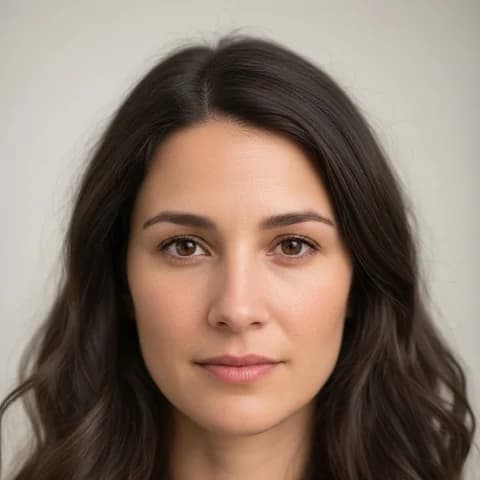
We sent our own test photos through the same prompt this page uses. The parents are illustrative: an image model made those photos, so they show no real people. Below, the parents sit on the left and the child on the right, so you can judge the likeness yourself.


- Test photos
- Two illustrative parent photos (couple 1)
- Result
- Child at 3 years, boy
- Age
- 3 years
- Gender
- Boy
- Parent photos
- 2
- HD file
- 2048 x 2560 px JPG
- Print size at 256 dpi
- 8 x 10 in
- Free preview
- 1024 x 1280 px, watermarked
- Made by
- gemini-2.5-flash-image
- Prompt
- 148 words
- HD file size
- 649 KB
How we test: every age and option gets the same test parents, and we compare each child with both photos by hand. More on the about page.
Why a baby eye color predictor cannot be exact
Eye color comes from melanin in the front layers of the iris. According to MedlinePlus, brown eyes hold a lot of it, while blue eyes hold much less. The genes that make and store melanin set the final shade.
Two genes on chromosome 15, OCA2 and HERC2, play the largest role. However, at least eight more genes add smaller effects, and they combine into a range from light blue to dark brown. That is why MedlinePlus says the old one gene model was too simple.
Under that old model, two blue eyed parents could never have a brown eyed child. In fact, it can happen, although it is uncommon. So any tool that gives you a neat percentage from two eye colors skips most of the biology.
Baby eyes keep changing in the first year
Even a perfect forecast would face a moving target. On HealthyChildren.org, a pediatrician explains that melanin cells take about a year to finish their work. For this reason, he does not guess a baby's eye color before the first birthday.
The change slows after the first 6 months, but there can still be plenty left. So the eyes you see at birth may not be the eyes your child has at age 2.
His rough rule of thumb is still useful. Two blue eyed parents are very likely to have a blue eyed child, though not every time. With one brown eyed and one blue eyed parent, he puts the odds at about even.
What our test showed about eye color
We tested with two illustrative parents from an image model, so they show no real people. The mom has brown eyes and long wavy dark brown hair. Meanwhile, the dad has blue eyes, curly red hair and a trimmed beard.
At 3 years with boy, the child came back with light blue gray eyes that lean toward his dad. He has brown hair with a warm auburn tint, a wide smile and a light blue T-shirt by a window.
That is one draw, not a result. With a brown eyed and a blue eyed parent, a real child could land on either side or in between. Our other renders of the same couple also show both brown and blue eyes.
How to use a baby eye color predictor for fun
First, use clear photos. Colored contacts, heavy filters or dim light will change what the model reads as eye color. Even so, the model only copies what it sees in the iris.
Second, run a few previews and look at the spread. If one shows brown eyes and the next shows blue, that is a fair picture of how open the question is.
Finally, ask family. A grandparent with blue eyes raises the odds of blue eyes a little, according to the same pediatrician. A family photo album tells you more about hidden genes than any single portrait.
What a photo can and cannot tell about eye color
| Question | Can a parent photo answer it? |
|---|---|
| The parents' current eye colors | Yes, if the photo is clear and has no filter |
| Which eye color genes each parent carries | No, hidden variants do not show in a photo |
| Your child's exact eye color | No, several genes combine into a range |
| A baby's final eye color at birth | No, it can keep changing for about a year |
| Whether blue eyed parents can have a brown eyed child | Rarely, but yes, per MedlinePlus |
| What a blended child might look like | Yes, as one imagined picture for fun |
| Our 3 year test | Blue gray eyes, closer to the dad |
Baby eye color predictor FAQ
Is there an accurate baby eye color predictor?
Not an exact one. Eye color depends on several genes, and parents can carry variants that do not show. Family history gives you rough odds at best.
Can two brown eyed parents have a blue eyed baby?
Yes. Brown eyed parents can carry variants for lighter eyes. A pediatrician on HealthyChildren.org calls brown eyes likely, but not guaranteed, for their child.
When do babies get their final eye color?
The change takes about a year, and it slows after the first 6 months. Because of that, guessing before the first birthday is unreliable.
Does the baby eye color predictor in this tool use genetics?
No. It looks at the two parent photos and draws one possible mix. It never sees genes, so treat the eye color as one guess.
Why can a newborn's eye color change?
Melanin keeps building up in the iris during the first year. So a newborn's eye color can shift as the months go by.
Which genes control eye color?
OCA2 and HERC2 on chromosome 15 play the main role. Genes like ASIP, IRF4, SLC24A4, SLC24A5, SLC45A2, TPCN2, TYR and TYRP1 add smaller effects.